
End of tenancy cleaning in Oxford is one of the most important tasks you will face before handing back the keys to your landlord or letting agent. Whether you are moving out of a Victorian terrace in Jericho, a modern flat in Cowley, or shared student housing in Headington, the condition in which you leave the property will directly determine whether you receive your full deposit back. This guide walks you through absolutely everything you need to know, from what the cleaning standard actually means legally, to what landlords inspect first, to how much professional cleaning costs across Oxford in [current_year].
Before anything else, it is worth being clear about what the phrase actually means in a legal and practical context. End of tenancy cleaning does not simply mean giving the property a good tidy before you leave. It means returning the property to the same standard of cleanliness that was documented in your check-in inventory report, with reasonable allowance made for fair wear and tear over the course of the tenancy.
This is an important distinction. The Tenancy Deposit Scheme, along with other government-approved deposit protection schemes such as myDeposits and the Deposit Protection Service, uses this matched standard when adjudicating cleaning disputes between tenants and landlords. In plain terms, if the inventory recorded a clean oven when you moved in and the oven is greasy when you move out, a deduction is entirely justifiable. If the carpets were already slightly worn when you arrived and they are still just slightly worn when you leave, that falls under fair wear and tear and cannot legally be charged to you.
Understanding this distinction from the start puts you in a much stronger position throughout the entire move-out process.
Oxford is not a typical UK rental market. The city is home to the University of Oxford and Oxford Brookes University, which together generate enormous demand for rental properties every single year. This constant cycle of student and professional tenants, combined with a significant proportion of heritage and period properties, makes the Oxford rental market one of the most active and scrutinised in the country.
Letting agents and landlords across Oxford, Oxfordshire are, on the whole, extremely thorough when conducting checkout inspections. Properties in areas like North Oxford and Summertown often command premium rents and attract landlords with equally premium expectations. Period properties in St Clements, Jericho, and Old Marston can present unique cleaning challenges, including original sash windows that accumulate grime in their frames, Victorian tiling in bathrooms, exposed brickwork, and older kitchen appliances that may retain grease more stubbornly than modern units.
Even in more contemporary rental areas such as Barton Park or parts of OX4 Cowley, letting agents often use professional inventory clerks who work from detailed photographic checklists. If you have ever had a checkout inspection in Oxford, you will know that these inspections are not cursory glances. They are methodical, room-by-room assessments where agents will open cupboards, inspect behind appliances, check window runners, and run a finger along the top of door frames.
Getting this wrong can cost you a significant portion of a deposit that, in Oxford, is often several hundred pounds or more.
One of the first questions most tenants ask is how much professional end of tenancy cleaning will cost. The honest answer is that it depends on the size of the property, its current condition, and which additional services you require alongside the core clean.
As a general guide for Oxford in 2026, here is what you can expect to pay:
A studio flat or bedsit typically costs in the region of £100 to £140 for a professional clean. A one-bedroom property usually falls between £140 and £180. A two-bedroom flat or house tends to range from £180 to £240. Three-bedroom properties often cost between £240 and £320, and larger four or five-bedroom houses can range from £320 upwards to £420 or more depending on the level of cleaning required.
These prices generally cover the full interior clean, including kitchens, bathrooms, bedrooms, living areas, and all internal windows. However, carpet cleaning and oven cleaning are sometimes quoted separately. Professional carpet cleaning in Oxford typically costs between £25 and £55 per room, while a standalone professional oven clean often falls between £50 and £80 depending on the condition of the appliance.
It is worth bearing in mind that cleaning costs in Oxford tend to run slightly higher than the UK national average. This reflects the high demand for cleaning services during peak moving seasons, particularly at the end of the summer academic term in June and July, as well as at Christmas when short-term student lets often turn over.
Always ask for a fixed-price quote before booking any cleaning service. A reputable company will quote based on property size and requirements rather than charging an open-ended hourly rate that could escalate unexpectedly.
Knowing what the inspection actually covers gives you a real advantage when planning your clean. Based on the standards expected by letting agents and landlords across Oxford and Oxfordshire, here is where the focus consistently falls during a checkout inspection.
The Kitchen
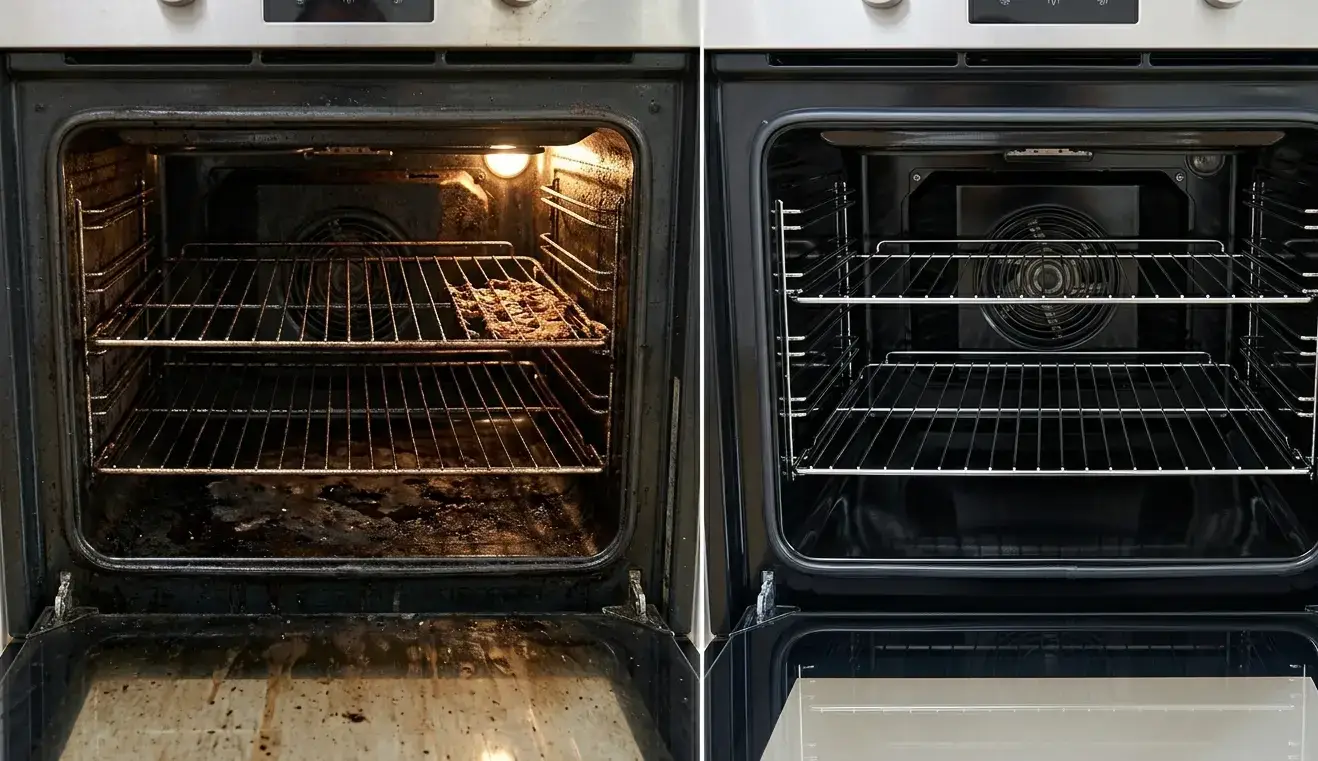
The kitchen receives more scrutiny than any other room during a tenancy checkout. This is where cleaning disputes most frequently originate. The oven interior, including the grill, racks, trays, and glass door panel, must be completely free of grease and carbon residue. The hob, including the area around the burners and beneath the grate, must be degreased and clean. The extractor fan and its filter, often overlooked during routine cleaning, must be free of accumulated grease and dust. Inside all cupboards and drawers must be wiped clean, including the hinges and runners. The fridge and freezer must be fully defrosted, wiped out, and free of any food residue or odour. Worktops, tiled splashbacks, and the sink, including the tap, the basin, and the plug hole, must all be clean and descaled where necessary.
The Bathroom
Bathrooms in Oxford properties, particularly in areas with hard tap water such as much of Oxfordshire, frequently develop significant limescale on taps, showerheads, bath panels, and toilet cisterns. This is one of the most common reasons tenants lose part of their deposit. Limescale is not wear and tear. It is a maintenance issue caused by insufficient cleaning, and it will be flagged during a checkout inspection.
Beyond limescale, inspectors will check for mould in the grout between tiles, soap scum on shower screens and bath panels, watermarks on mirrors, and hygiene around the toilet. The floor, including the area around and behind the toilet and under the bath panel, also requires attention.
Bedrooms and Living Areas
Bedrooms and living rooms are assessed for dust on all surfaces, including areas that are easy to miss such as the tops of wardrobes, the insides of wardrobes and drawers, light fittings, skirting boards, and window runners. Carpets must be vacuumed thoroughly, and any visible stains should ideally be professionally treated. Walls are checked for marks, scuffs, and staining, though minor scuffs after a long tenancy typically count as wear and tear. Light switches, plug sockets, door handles, and door frames are all inspected.
Windows and Doors
Internal window cleaning is a consistent requirement across Oxford tenancy inspections. This includes not just the glass itself but the window frames, sills, and runners. Doors, door frames, and the areas around door handles and locks are also checked.
Floors Throughout the Property
Hard floors must be swept and mopped, including beneath removable appliances and furniture where possible. Carpets across all rooms, staircases, and hallways must be vacuumed, and professional carpet cleaning may be required if the inventory shows carpets were cleaned to a professional standard at the start of the tenancy.
Having a structured checklist is the most effective way to make sure nothing is missed before your inspection. Work through each room from the ceiling down, finishing with the floor.
Clean the oven cavity, racks, trays, and door glass thoroughly. Degrease the hob and clean beneath the grates. Remove and clean the extractor fan filter. Wipe inside and outside all cupboards and drawers. Clean the microwave inside and out, including the turntable. Defrost and clean the inside of the fridge and freezer, and wipe down all exterior surfaces. Clean the sink, taps, and surrounding tiles or splashback. Mop the kitchen floor and clean the skirting boards. Wipe down light fittings and check the top of the cupboards for grease and dust.
Descale and clean the shower screen, taps, showerhead, and bath. Scrub the grout between wall and floor tiles. Clean the toilet inside the bowl, under the rim, around the base, and the seat and lid. Remove limescale from taps and the sink basin. Clean the mirror and any glass surfaces. Empty and wipe out bathroom cabinet shelves. Mop the floor including behind the toilet.
Bedroom and Living Room Checklist
Dust all surfaces from top to bottom, including light fittings, tops of wardrobes, and ceiling corners. Wipe skirting boards. Clean inside wardrobes, drawers, and any built-in storage. Clean light switches, plug sockets, and door handles. Clean internal windows and the frames and sills. Vacuum carpets carefully, including under the bed and beside the skirting boards.
General Throughout the Property
Clean all internal doors and door frames. Vacuum staircases and hallways. Remove all personal belongings and rubbish. Clean inside any communal cupboards. Wipe down radiators and any built-in shelving.
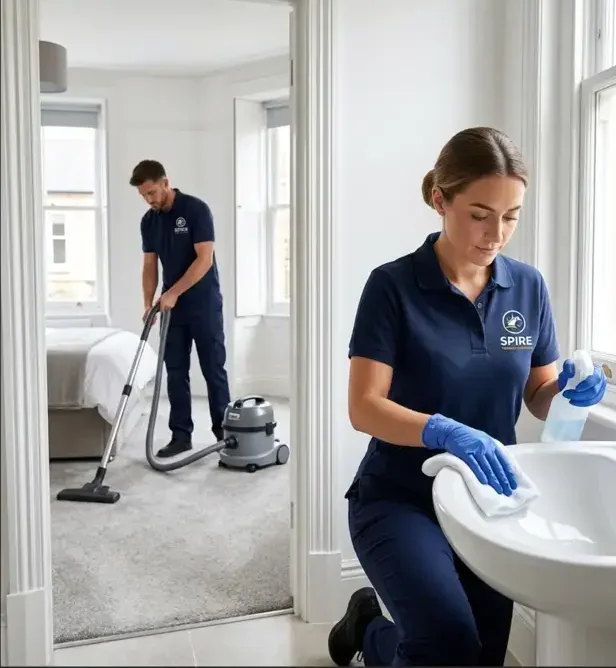
This is a question many Oxford tenants wrestle with, particularly students or young professionals who are already managing moving costs on a tight budget. The honest answer depends on the condition of the property and the standard recorded in your inventory.
For properties in relatively good condition where you have maintained a reasonable level of cleanliness throughout the tenancy, a thorough and methodical DIY clean can absolutely meet the required standard. However, there are specific areas where professional cleaning consistently delivers better results and is harder to dispute.
Oven cleaning is the single biggest area where DIY approaches fall short. The grease and carbon deposits that build up inside an oven over months or years are extremely difficult to remove without industrial-grade cleaning solutions and the techniques that come with experience. A professional oven cleaning service in Oxford will strip the oven down, soak the components, and return the interior to a near-new condition that a DIY approach with household products is unlikely to match.
Carpet cleaning is the other area where professional treatment makes a measurable difference. Hot water extraction equipment used by professional carpet cleaners removes deep-set soiling and odours that a domestic vacuum simply cannot address. In Oxford, where many rental properties have older fitted carpets in student houses and HMOs, professional carpet cleaning is often not just recommended but specified in the tenancy agreement.
If your tenancy agreement states that the property was professionally cleaned at the start of the tenancy, you will almost certainly be required to return it in the same condition. In this case, professional cleaning is not optional. It is a contractual requirement, and the Tenant Fees Act 2019 means your landlord cannot force you to use a specific named company, but they can require professional-standard cleaning.
Understanding your legal rights gives you confidence during the move-out process and protects you in the event of a dispute. Here are the most important points every Oxford tenant should know.
Your deposit must be protected in a government-approved scheme within 30 days of payment. The three schemes approved in England are the Tenancy Deposit Scheme, myDeposits, and the Deposit Protection Service. If your landlord has not protected your deposit, you may be entitled to compensation of up to three times the deposit amount.
Under the Tenant Fees Act 2019, your landlord cannot require you to hire a specific cleaning company or pay for a professional clean unless the property was professionally cleaned at the start of your tenancy and this was clearly stated in the tenancy agreement. If it was not stated, you cannot be compelled to pay for professional cleaning, though you must still return the property in a clean condition.
Fair wear and tear is a legal concept that protects you from being charged for deterioration that results from ordinary, everyday use of the property over time. Slightly worn carpet in a hallway after three years, minor scuffs on painted walls, and small scratches on kitchen worktops all typically qualify. Grease-caked oven interiors, heavy limescale in the bathroom, and large carpet stains do not.
If your landlord makes a deduction you believe is unfair, you have the right to raise a formal dispute through the relevant deposit protection scheme. The scheme will appoint an impartial adjudicator who will review the evidence from both parties and reach a binding decision. Having clear, timestamped photographs of the property after your clean, along with receipts from any professional cleaning company you used, significantly strengthens your position in any dispute.
Good documentation is the most underrated part of the move-out process. Taking the right photographs at the right time can be the difference between winning and losing a deposit dispute.
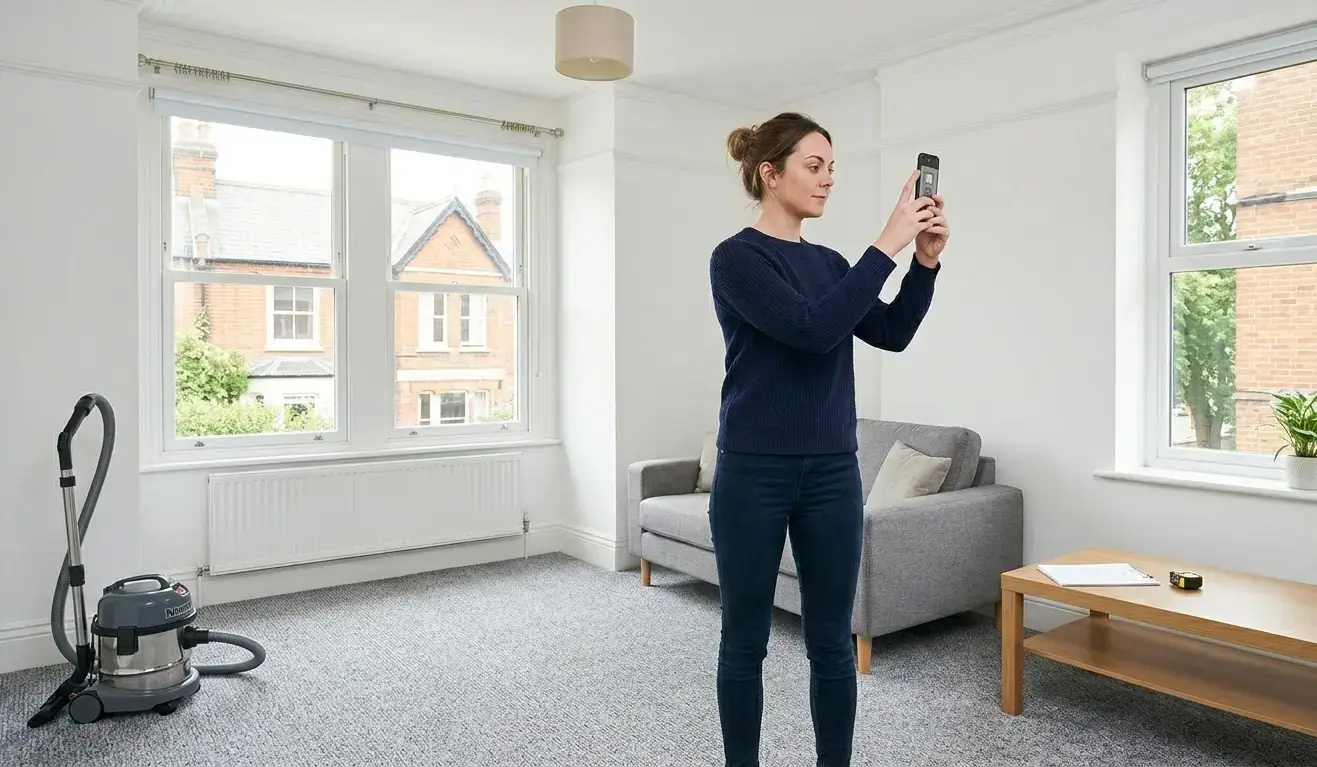
After completing your clean, walk through the entire property and take clear, well-lit photographs of every room. Pay particular attention to the oven interior, the bathroom, kitchen worktops, and any carpets. Take close-up shots of areas that could be considered particularly high risk, such as the shower screen, the inside of the fridge, and the tops of kitchen cupboards.
Make sure every photograph is timestamped. This is most easily done by enabling the date-stamp feature in your phone camera settings or by sharing the images to yourself via email or a cloud service that records the upload date. A short video walkthrough of the entire property, recorded in good light, can also be powerful evidence.
Keep all invoices and receipts from any professional cleaning services you used. A receipt showing that the oven was cleaned professionally, or that carpets were cleaned to a professional standard, provides strong documentary evidence in any adjudication proceeding.
Compare your photographs against the original check-in inventory before you hand back the keys. If there are any areas that the inventory recorded as already damaged or dirty when you moved in, make sure those conditions are clearly visible in your move-out photographs so they cannot be attributed to you.
Oxford is a city of genuinely distinct neighbourhoods, and the type of property you are cleaning out will vary significantly depending on where you live.
In North Oxford, properties in Summertown and areas around the OX2 postcode tend to be larger family homes with multiple bedrooms, and the cleaning scope can be considerable. These areas also attract thorough and experienced letting agents, so the standard expected at checkout is high.
In East Oxford, the OX4 Cowley area has a large number of shared houses and HMOs that are popular with students and young professionals. These properties often show more significant wear by the end of a tenancy, particularly in shared kitchens and bathrooms. Coordinating the cleaning across multiple tenants in a shared property requires clear planning and communication about who is responsible for each area.
In OX3 Headington, the proximity to the John Radcliffe Hospital and Oxford Brookes University means many rental properties house NHS staff, overseas students, and postgraduate researchers. This demographic typically has high personal standards but may be leaving on short notice due to work or academic schedules, making professional cleaning services a practical and time-saving option.
In the OX1 city centre, properties are often above commercial premises or within converted historic buildings. These properties frequently have older fixtures and a higher likelihood of limescale issues due to the local water hardness. Cleaning older original features requires care to avoid damage.
The surrounding towns of Abingdon, Kidlington, Bicester, and Didcot all fall within the Oxfordshire rental market and follow broadly the same expectations and standards as Oxford itself.
Even well-intentioned tenants often fall short during the move-out clean. These are the areas where oversights most commonly happen.
Forgetting the tops of kitchen cupboards is extremely common. These surfaces collect grease and dust over months and are almost always checked during a professional inspection. Neglecting the inside of kitchen cupboards and drawers is another frequent oversight. Agents will open every single storage space during a checkout.
Skipping the extractor fan filter is one of the most costly mistakes in the kitchen. A greasy, blocked filter is impossible to miss and is frequently cited as the reason for deductions. The same applies to the back and underneath of the cooker, where grease and crumbs accumulate.
In the bathroom, failing to deal with limescale properly is the issue that causes the most disputes in Oxford properties. Hard water limescale requires proper descaling products and time. It cannot simply be wiped away.
Throughout the property, neglecting skirting boards, window sills, and the insides of window frames are areas where many tenants fall short. These surfaces are straightforward to clean but take time, and they are routinely checked.
Finally, not removing all rubbish and personal belongings from every cupboard, loft space, or outbuilding is a surprising but common problem. Leaving behind any items that you do not want can result in clearance fees being deducted from your deposit.
If you have decided to hire professional cleaners for your move-out, choosing the right company matters. Here is what to look for.
Always check that the company offers a clear, itemised fixed-price quote rather than a vague estimate. A professional cleaning company should be able to give you a firm price based on the number of bedrooms and any additional services such as carpet cleaning or oven cleaning.
Look for a cleaning guarantee or re-clean promise. Reputable end of tenancy cleaning companies in Oxford will offer to return and re-clean any area that fails the landlord inspection at no additional charge. This kind of guarantee shows confidence in the standard of their work and gives you meaningful protection.
Check for public liability insurance. Professional cleaning teams work inside your home with commercial-grade equipment and chemicals. Insurance coverage protects you in the unlikely event of accidental damage.
Look for cleaners who follow a landlord-approved checklist. The best companies work from a structured checklist that mirrors what letting agents actually inspect, which significantly reduces the risk of anything being missed.
DBS-checked and trained cleaning staff are worth asking about. Particularly in Oxford, where many rental properties are in family homes or properties managed by individuals rather than large agencies, knowing that the team entering your home has been background checked is a reasonable expectation.
Moving out of a rental property in Oxford is rarely without stress, but approaching the end of tenancy cleaning with a clear plan makes an enormous difference to the outcome. Know what your inventory says. Know what your landlord or agent will inspect. Work through a structured checklist from the kitchen to the bathroom to every bedroom. Document everything with photographs before you leave.
For many tenants, particularly those with demanding move-out timelines or properties that have been let for several years, professional end of tenancy cleaning is not just a convenience. It is a practical investment that often costs significantly less than the deposit deductions that result from a substandard clean.
If you are preparing to move out of a rental property in Oxford or across Oxfordshire, getting the cleaning right the first time is the single most effective way to protect your deposit and leave on good terms with your landlord.