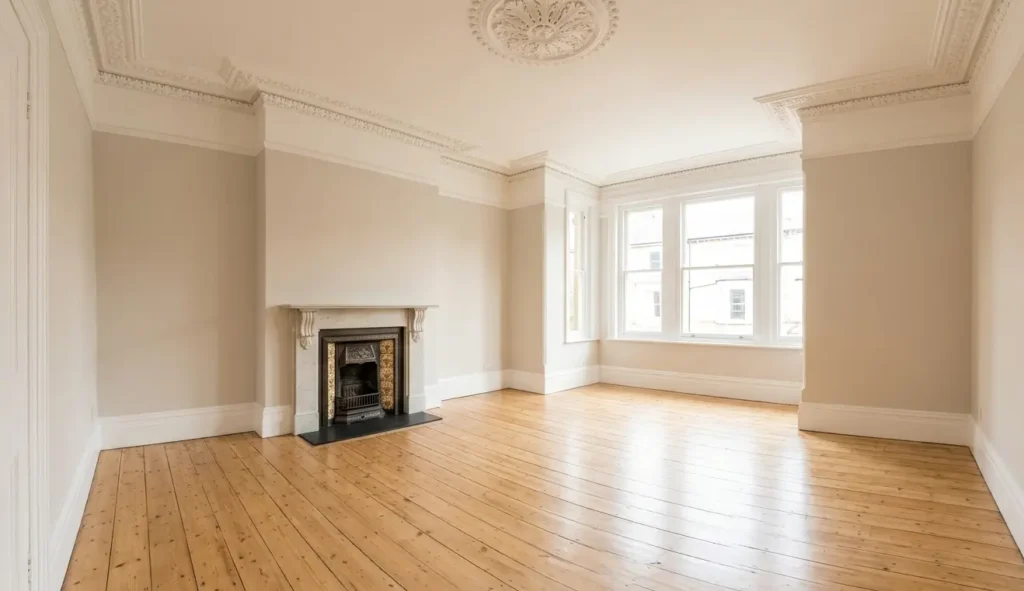
If you are moving out of a period property in Oxford and need to book end of tenancy cleaning, the first thing to understand is that your property is not like a modern flat. The cleaning approach, the products used, the time required, and the level of care involved are all fundamentally different from a standard contemporary rental. Get this wrong and you risk either damaging original features that cannot be easily replaced or failing the checkout inspection because a cleaning team unfamiliar with period properties has used the wrong techniques on surfaces that require specialist handling.
Oxford has one of the richest concentrations of period residential properties of any city in England. Victorian terraces in Jericho and East Oxford, Georgian townhouses in North Oxford and Summertown, Edwardian semis across Headington and Iffley, Arts and Crafts homes in Old Marston, and converted college outbuildings in the city centre all present a set of cleaning challenges that simply do not exist in a modern new-build apartment. Landlords who own these properties know their value and know exactly what they look like when they have been cleaned properly. Letting agents managing them apply the same high standard of expectation.
This guide covers every major cleaning challenge specific to Oxford period properties, explains why each one matters, and tells you exactly what a professional cleaning team needs to do to address it correctly.
To understand the cleaning challenges, it helps to understand what makes Oxford’s period housing stock distinctive in the first place.
The vast majority of Oxford’s most desirable rental properties were built between 1840 and 1930. This era of construction used materials, methods, and design features that are entirely absent from modern property development. Original timber floorboards, single-pane sash windows with painted wooden frames, lime-washed or distemper-painted walls, ornate plasterwork cornicing and ceiling roses, Victorian or Edwardian tiled fireplaces, original cast iron radiators, stone or encaustic tiled hallways, and period bathroom fixtures all require handling that is fundamentally different from cleaning painted MDF, UPVC windows, vinyl flooring, and modern ceramic bathroom suites.
Beyond the materials themselves, Oxford’s period rental properties often fall within conservation areas designated by Oxford City Council. Several areas of the city, including large portions of Jericho, North Oxford, St Clements, and the city centre, are subject to conservation area restrictions that govern how properties are maintained and altered. A number of properties are also listed buildings, classified as Grade I or Grade II by Historic England, which places legally binding obligations on owners regarding how the fabric of the building is treated.
For tenants, none of this changes your fundamental obligation to return the property in a clean condition matching the check-in inventory. But it does mean that how you clean matters enormously, because the wrong product or the wrong technique on the wrong surface in an Oxford period property can cause damage that is significantly more expensive to rectify than the original cleaning itself.
Original timber floorboards are one of the most valued features in Oxford period properties and one of the most commonly mishandled during end of tenancy cleaning. Streets such as Observatory Street and Walton Street in Jericho, Park Town in North Oxford, and much of the residential stock around Iffley Road in East Oxford feature properties with original Victorian floorboards that are over one hundred years old.
These floors cannot be cleaned with steam mops. Steam introduces moisture directly into timber that has been in place for a century or more, causing boards to swell, warp, and in some cases cup or crack. The damage can be severe and the cost of professional floor restoration or replacement is considerable.
Bleach, harsh alkaline cleaners, and multi-surface spray products that are entirely appropriate for ceramic tiles or vinyl flooring will strip the finish from original timber, cause discolouration, and potentially raise the grain of the wood. Once this type of surface damage occurs, it falls outside the category of fair wear and tear and will be deducted from the tenant’s deposit.
The correct approach for original timber floors is a dry sweep to remove loose dust and debris, followed by a very lightly dampened clean using a pH-neutral wood soap or a specialist timber floor cleaner diluted to the appropriate concentration. The floor should never be left wet. The product must be specifically formulated for untreated or lightly treated timber rather than for lacquered or heavily sealed modern wood flooring.
In hallways and kitchens where original timber has been exposed to heavier traffic or food soiling, the cleaning approach needs to be more targeted without becoming more aggressive in terms of moisture or chemical strength.
When you book end of tenancy cleaning in Oxford for a period property with original timber floors, the company you choose must be specifically asked whether their team is trained in timber floor care. This is not a standard skill included in a generic domestic cleaning training programme.
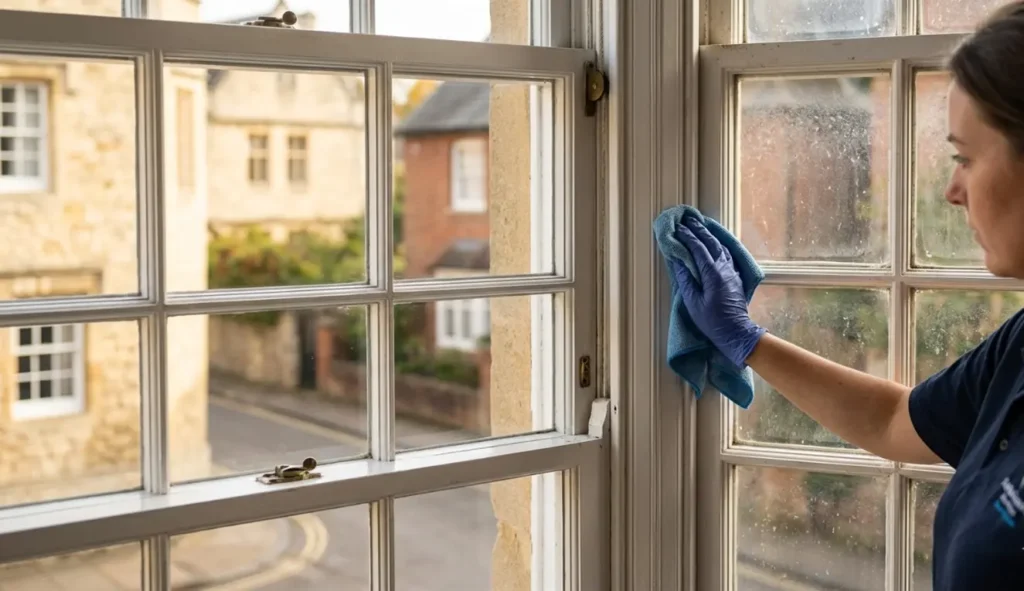
Original sash windows are one of the most architecturally distinctive features of Oxford period properties and one of the most cleaning-intensive elements of any move-out clean in this type of home.
The anatomy of a sash window creates multiple zones where grime accumulates in ways that simply do not occur with modern UPVC casement windows. The runners on either side of the frame, through which the upper and lower sashes slide, collect a dense accumulation of dust, dead insects, paint flakes, and general debris over months of use. The gap between the upper and lower sash when both are in the central position creates a ledge that traps dust. The external glazing bars on Georgian or early Victorian windows divide the glass into small panes with narrow wooden frames that collect atmospheric grime along every edge.
The painted wooden frames themselves require careful cleaning. Painted timber around sash windows must be wiped clean without saturating the paint layer, which can cause bubbling, peeling, or cracking if moisture penetrates beneath it. The bottom rail of the lower sash, which sits on the inner sill when the window is closed, is one of the areas most consistently missed and most consistently checked during an Oxford period property checkout inspection.
Cleaning sash windows correctly involves addressing each sash independently, cleaning the full runner channels on both sides of the frame, wiping all glazing bars carefully, cleaning the glass in each pane, cleaning the interior sill, and addressing the exterior sill where safely accessible from inside. For windows on upper floors, the exterior glass and sill may require specialist equipment.
Letting agents and landlords managing period properties in North Oxford, Jericho, and Summertown are extremely familiar with the appearance of a sash window that has been cleaned thoroughly versus one that has been wiped quickly. The difference is immediately visible and it is always flagged.
Original Victorian and Edwardian plasterwork is a defining feature of period properties across much of Oxford’s desirable rental stock. Ceiling roses, decorative cornicing, picture rails, dado rails, and in some properties, wall panelling with plaster detailing, all require cleaning that is entirely different in character from wiping down a smooth painted ceiling in a modern property.
Dust accumulation on ornate plasterwork is significant. The intricate recesses and raised profiles of Victorian cornicing collect dust that cannot be removed with a flat microfibre cloth. Cobwebs establish themselves in the deeper recesses of ceiling roses and behind the projecting profile of picture rails. In properties that have not been cleaned professionally throughout the tenancy, this accumulation can be visually dramatic and will absolutely be noted during a checkout inspection.
The cleaning approach for original plasterwork must be extremely gentle. Original lime plaster, which is the substrate beneath the decorative surface in many Victorian Oxford properties, is considerably more vulnerable to impact damage than modern gypsum plasterboard. Vacuuming ornate plasterwork with an appropriate soft brush attachment is typically more effective and safer than attempting to wipe it with a cloth. Any wiping must be done with minimal moisture and absolutely no pressure.
Chemical cleaning products must never be used directly on untreated or historically painted plasterwork. Many period Oxford properties retain original paint layers that are of historic interest and any chemical treatment that lifts or discolours this paint can create a dispute that goes well beyond a simple cleaning deduction.
The practical implication for tenants is that cleaning the ceiling and upper wall areas in an Oxford period property requires significantly more time, care, and specialist technique than in any modern property. This is an area where a generic domestic cleaning company with no period property experience is likely to either rush through it ineffectively or skip it entirely.
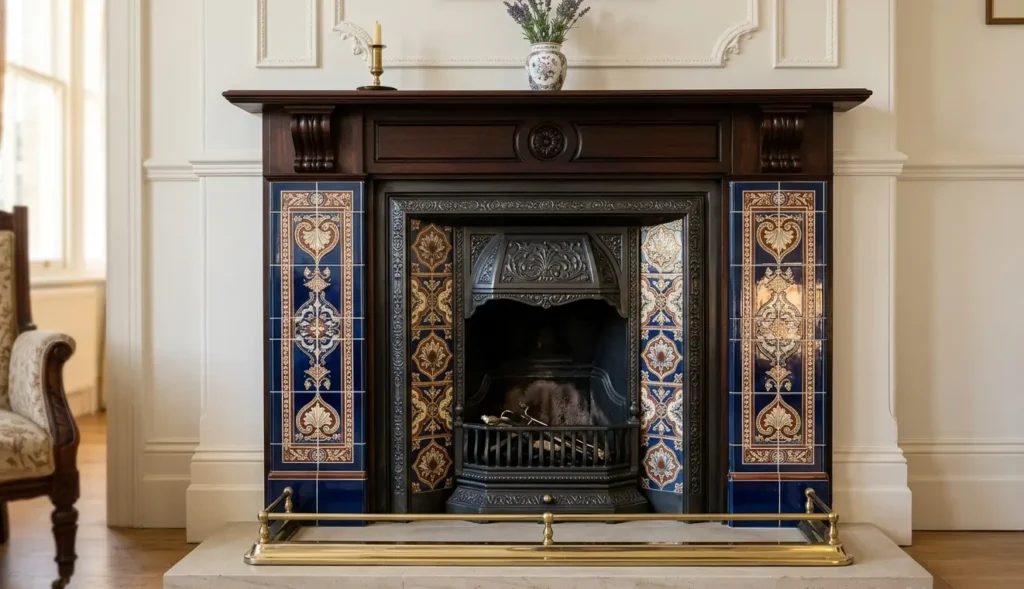
Original tiled fireplaces are present throughout Oxford’s Victorian and Edwardian housing stock, appearing in bedrooms, living rooms, and dining rooms across properties in Jericho, North Oxford, Headington, and Cowley. These features are among the most distinctive and valued elements of period Oxford homes, and they present a very specific set of cleaning challenges at the end of a tenancy.
Victorian encaustic and majolica tiles used in fireplace surrounds and hearths are clay-bodied ceramic tiles with a genuinely porous surface structure. They are categorically different from the fully vitrified, sealed ceramic tiles used in modern kitchens and bathrooms. Acidic cleaning products, bleach, and many commercial tile cleaners will damage the surface of Victorian tiles, causing permanent discolouration and in some cases chemical etching. Even domestic descalers, which are entirely appropriate for modern bathroom tiles, can cause irreversible damage if applied to original Victorian tilework.
Cleaning Victorian fireplace tiles correctly requires a pH-neutral, non-acid cleaning product applied sparingly with a soft cloth and worked gently across the tile surface. The tile joints, which in original Victorian fireplaces are typically filled with a lime-based or period grout rather than modern grout, must be cleaned without using products that would dissolve or discolour the original jointing material.
The fire grate or basket, the cast iron fireback where present, and the interior of the fireplace opening itself all require attention. Cast iron components must be cleaned with appropriate metal cleaning products and protected against moisture to prevent surface rust. Any ash or soot residue in the hearth must be completely removed.
For tenants moving out of an Oxford period property that includes multiple original fireplaces, the cleaning of these features alone can represent a substantial proportion of the total move-out cleaning time. It is one of the areas most commonly underestimated when tenants attempt a DIY end of tenancy clean.
Oxford and the surrounding Oxfordshire area receives its water supply from a catchment area with naturally high mineral content. The Thames Water supply across Oxford is classified as hard to very hard, meaning it carries elevated levels of calcium and magnesium carbonates that are deposited on surfaces whenever water evaporates. This limescale challenge affects all Oxford rental properties, but it is particularly pronounced in period properties for a specific reason.
Original bathroom fixtures in Victorian and Edwardian Oxford properties, including exposed chrome mixer taps, freestanding or roll-top baths, high-level toilet cisterns, and original pedestal sinks, have surface finishes and material compositions that differ from modern bathroom fittings. Chrome plating on period taps is often thinner and more vulnerable than modern chrome finishes, meaning that aggressive descaling products used without care can strip the chrome layer or cause pitting.
Original cast iron baths, which are found in some of Oxford’s finest period rental properties, must never be cleaned with abrasive products or coarse scrubbing pads. The original enamel on a cast iron roll-top bath is irreplaceable, and surface damage to period enamel will generate a deposit deduction that far exceeds the cost of a professional cleaning service.
Stone or slate bathroom floors, found in some of Oxford’s older period properties, must never be cleaned with bleach or acidic tile cleaners. Natural stone reacts chemically with acid and will be permanently etched. The appropriate cleaner is a pH-neutral stone-safe product.
The descaling challenge in a period Oxford bathroom requires a careful approach. Limescale on chrome taps must be treated with a dilute, appropriate descaler left on the surface for a controlled period rather than a strong product applied aggressively. The goal is to dissolve the mineral deposit without compromising the underlying metal finish.
If you need to book end of tenancy cleaning in Oxford for a period property with original bathroom fixtures, confirm explicitly with the company that their team is familiar with period bathroom cleaning and knows which products are and are not appropriate for this type of fitting. Spire Tenancy Cleaning’s bathroom cleaning service in Oxford covers period fixtures and original fittings as part of its professional approach to tenancy cleaning across the city.
The hallway of an Oxford period property is frequently one of its most architecturally significant spaces, and it is one of the areas that letting agents and landlords inspect most carefully during a checkout. Victorian terraces across Jericho, East Oxford, and Headington commonly feature original encaustic tile hallway floors, black and white geometric patterned tiles, or natural stone flags at the entrance, often continuing to the base of the staircase.
Original encaustic tiles are unglazed. The pattern in an encaustic tile is created by different coloured clays pressed together before firing, and the tile surface is entirely porous. This is fundamentally different from modern glazed ceramic tiles, which have an impermeable surface coating that resists moisture and cleaning products. An unglazed encaustic tile absorbs whatever is applied to it.
The practical implications for cleaning are significant. Bleach applied to an encaustic tile floor will penetrate the tile surface and lighten or discolour the clay, potentially causing irreversible damage to a floor that is both historically significant and prohibitively expensive to replace. Many standard tile cleaners, including those sold for general-purpose bathroom and kitchen tile cleaning, are acidic and will etch or discolour unglazed encaustic tiles.
The correct approach involves sweeping the floor carefully to remove all loose grit, which is important because any abrasive particles ground underfoot during cleaning will scratch the tile surface. A specialist encaustic tile cleaner or a mild pH-neutral stone soap applied sparingly is the appropriate product. The floor must not be left wet and must be dried promptly after cleaning.
In period properties where the original encaustic tile hallway has been properly maintained and sealed throughout the tenancy, the move-out clean is relatively straightforward. In properties where the tile has been subjected to years of heavy foot traffic without maintenance, a more specialist restoration approach may be required, which falls outside the scope of a standard end of tenancy clean and should be discussed with the cleaning company before booking.
Victorian and Edwardian properties in Oxford typically have ceiling heights of ten to twelve feet, and in some North Oxford and Summertown townhouses, principal reception rooms may have ceilings of thirteen feet or higher. This architectural feature creates a practical cleaning challenge that simply does not arise in modern properties, where standard ceiling heights of eight feet are universally the norm.
Cobwebs accumulate at the junction of high walls and ceilings, around ceiling roses, along the upper surface of picture rails, and in the tops of bay window recesses. Dust settles on the tops of cornicing profiles, on the upper sections of tall sash window frames, and on any exposed beams in properties with period oak structures.
Reaching these areas safely and effectively requires appropriate equipment, specifically extendable cleaning tools, stable stepladders of sufficient height, and the physical confidence to work safely at height. A cleaning team that arrives at an Oxford period property with standard household equipment will not be able to address these areas properly.
Dust that accumulates at high levels falls during the cleaning process and settles on lower surfaces, which is why ceiling and upper wall areas must always be addressed first before any lower surfaces are cleaned. Skipping the high areas and cleaning the lower surfaces first simply means the lower surfaces will need to be cleaned again after the high-level work is done.
Many Oxford period properties, particularly those that have been let as family homes in North Oxford, Summertown, and Headington, retain original or vintage kitchen elements that require careful cleaning. This might include an original Aga or Rayburn range cooker, a Belfast sink, original wooden kitchen units, stone or slate worktops, or quarry tile kitchen floors.
An Aga or Rayburn range cooker is one of the most complex appliances to clean at the end of a tenancy. These cast iron range cookers operate at a permanent high temperature and accumulate cooking residue differently from a standard domestic oven. The exterior cast iron lids, the interior hotplate and oven surfaces, the chrome or enamel lids, and the vents all require cleaning techniques that are entirely specific to this type of appliance. Professional Aga cleaning is a specialist skill in its own right, and a standard oven cleaning service is not an appropriate approach for this type of cooker.
Belfast sinks, found in many period Oxford kitchen renovations and original Victorian sculleries, are made from vitreous fireclay. This is a robust material but it is not immune to chemical damage. Bleach used in high concentrations and left in prolonged contact with an original Belfast sink can cause discolouration of the white glaze. The correct approach uses appropriate non-bleach cleaners with gentle agitation.
Stone worktops in period kitchens, whether granite, limestone, or slate, must never be cleaned with acidic products. Lemon juice, vinegar, and most commercial kitchen sprays are mildly acidic and will etch limestone and marble surfaces over time. A pH-neutral stone cleaner is the only appropriate product.
For properties with specialist appliances, the oven cleaning service in Oxford provided by Spire Tenancy Cleaning can advise on the appropriate approach for your specific appliance type when you book, ensuring the right technique is used without causing damage that would generate a deduction far larger than the cleaning cost itself.
Oxford’s climate is one of the wetter and more overcast in southern England, influenced by its inland position and the river valleys that run through the city. Period properties, with their solid brick walls and single-glazed sash windows, have none of the insulation or vapour barriers that modern building regulations require, which means condensation and damp are considerably more common in Oxford’s Victorian and Edwardian rental stock than in modern properties.
At the end of a tenancy, mould growth in period Oxford properties is one of the most common and most contested issues between tenants and landlords. The key legal question is whether the mould results from a structural defect in the property, such as penetrating damp from outside or rising damp from the ground, which is the landlord’s responsibility to address, or from condensation caused by the tenant’s behaviour, such as insufficient ventilation, drying clothes indoors, or failing to heat the property adequately, which may be attributable to the tenant.
In practice, distinguishing between these two causes is not always straightforward, and tenants who leave a period Oxford property with visible mould growth will almost certainly face a dispute regardless of the underlying cause. The safest approach is to ensure all mould is professionally treated before the checkout inspection and to document the treatment clearly with dated photographs.
Professional mould treatment involves applying appropriate biocidal treatment to the affected area, allowing adequate contact time, and then cleaning away the residue. Simply wiping visible mould away without treating it biocidally is ineffective because the fungal spores remain on the surface and will regrow rapidly.
On painted surfaces in period properties, mould treatment must use a product that is effective against the mould spores without stripping or discolouring the underlying paint. Original paint layers in period Oxford properties may be distemper-based or early emulsion, both of which react differently to treatment products than modern emulsion. This is another area where the cleaning company’s knowledge of period property materials matters enormously.
Tenants renting period properties in Oxford’s conservation areas or in listed buildings may be unaware that there are legally binding restrictions on how these properties can be altered, which in some contexts can affect how cleaning-related damage is addressed.
If an original feature of a listed Oxford property is damaged during cleaning, for example if aggressive descaling strips the enamel from an original cast iron bath or if chemical cleaning damages the surface of original Victorian tiles, the landlord may be required under the Planning (Listed Buildings and Conservation Areas) Act 1990 to use like-for-like materials and specialist restoration techniques to repair the damage. These restoration costs are significantly higher than the cost of modern replacement equivalents and can generate deposit deduction claims that are substantially larger than the original cleaning service would have cost.
This is not a risk that applies to every Oxford rental property, but it is one that applies specifically to period properties in areas such as the Jericho Conservation Area, the North Oxford Victorian Suburb Conservation Area, and other designated areas across the city. If you are uncertain whether the property you are vacating is in a conservation area or is itself a listed building, this information is publicly available through the Historic England listed buildings register and Oxford City Council’s planning portal.
When you book end of tenancy cleaning in Oxford for a period property, asking the cleaning company directly whether their team has experience with listed and conservation area properties is entirely reasonable and any reputable company with genuine local expertise should be able to answer this confidently.
The points covered throughout this guide make clear that end of tenancy cleaning in an Oxford period property is a genuinely specialist task. It is not simply a matter of working more carefully or taking more time than in a modern property. It requires knowledge of the specific materials involved, the specific products appropriate for each surface type, and the specific techniques needed to clean effectively without causing damage.
A cleaning company with no period property experience, or a domestic cleaner working with standard household products, is not equipped to deliver this standard of clean safely. The risk is not only that the property will not pass the checkout inspection. The risk is also that the cleaning itself causes damage to original features that results in deposit deductions far exceeding the cost of a professional cleaning service.
When you are ready to book end of tenancy cleaning in Oxford for a period property, Spire Tenancy Cleaning provides a service specifically designed for the unique demands of Oxford’s heritage housing stock. From period bathroom fixtures and original timber floors to Victorian fireplaces and ornate plasterwork, the team works with the materials, products, and techniques appropriate for the property rather than applying a one-size-fits-all approach.
You can explore the full range of professional cleaning services available across Oxford and request a free, no-obligation quote through the contact page, where you can provide specific details about your period property so the team can advise on the most appropriate approach for your move-out clean.
For additional guidance on the overall move-out cleaning process in Oxford, the complete guide to end of tenancy cleaning in Oxford covers the full range of what letting agents and landlords inspect and how to approach the clean systematically.
Period properties take significantly longer to clean to the required standard due to their architectural complexity. Original features such as ornate plasterwork, sash windows, tiled fireplaces, timber floors, and stone hallways all require more time and more specialist care than the equivalent surfaces in a modern property. Additionally, specialist products appropriate for period materials cost more than standard domestic cleaning products. The additional cost reflects genuine additional time and expertise rather than a premium for the property type alone.
It is possible but genuinely challenging. The risk with a DIY clean in a period property is not just falling short of the required cleanliness standard. It is also inadvertently causing damage to original features through the wrong product or technique. For tenants without specific knowledge of period building materials and appropriate cleaning methods, professional cleaning in Oxford for a period property is a strongly recommended approach.
Original encaustic floor tiles, natural stone such as limestone, marble, and slate, Victorian and Edwardian bathroom tiles, original timber floorboards, and original cast iron features including baths and fireplaces should never be cleaned with bleach. pH-neutral specialist products appropriate for each material type are the correct approach.
You can check whether a property falls within a designated conservation area using Oxford City Council’s online planning information portal. You can also check whether the property itself is a listed building through the Historic England listed buildings online database, which is publicly accessible.
The cleaning tasks are broadly similar in their categories: kitchen, bathrooms, bedrooms, living areas, floors, windows. But the materials involved, the products appropriate for those materials, the time required for each area, and the techniques needed are all fundamentally different. A Victorian terrace in Jericho with original floorboards, sash windows, ornate plasterwork, Victorian tiles, and a cast iron fireplace requires specialist knowledge and significantly more time than a modern flat with laminate flooring, UPVC windows, and ceramic bathroom tiles.